
Sound Upgrade: How I Transformed a Challenging Church Space on a €2500 Budget
Enhanced clarity for worship sessions, with a very limited budget.
4/30/20262 min read
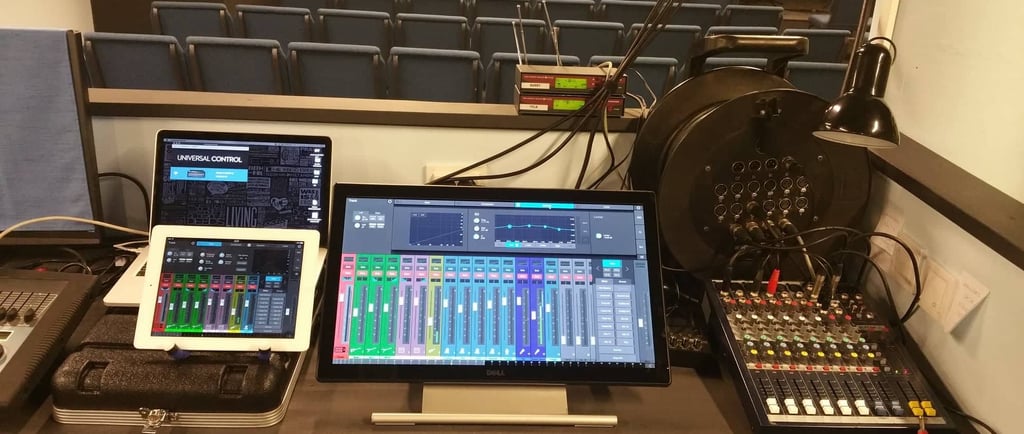
When a church changes location, it often brings both opportunities and challenges. This was exactly the case with a church I had the opportunity to serve.
The good news?
We were able to keep our audio equipment fully set up, since the space was rented 24/7. That alone removed a huge layer of weekly setup stress.
The challenge, however, was immediate.
The new room was lower, tighter, and awkwardly shaped, creating serious acoustic issues right from the start. Sound reflected unpredictably, stage noise became more noticeable, and achieving clarity felt difficult.
On top of that, we had a limited upgrade budget of just €2500.
At first glance, it seemed like a major limitation. But in reality, it forced us to focus on what truly matters: building a simple, effective system rather than chasing expensive gear.
The Core Problem: Stage Noise and Room Limitations
The biggest issue we identified early on was stage noise.
With a low ceiling and reflective surfaces, sound from instruments and monitors quickly filled the room, making it muddy and difficult to control. Traditional solutions like heavy acoustic treatment weren’t really an option due to the space and budget restrictions.
So instead of trying to fix everything at once, we focused on reducing noise at the source.
The Solution: A Smart, Minimal System
We designed a system that prioritized control, clarity, and simplicity.
Here’s what we implemented:
A PreSonus digital rack mixer for flexible control
A multi-channel headphone amplifier
Wired In-ear monitoring for the team (replacing loud stage monitors)
An additional delay line speaker to improve coverage
Necessary cabling to support the system
To complement this, we added what little acoustic treatment we could:
Thick curtains
A heavy fur carpet placed above the pastor area
These weren’t perfect solutions—but they made a noticeable difference in reducing reflections.
A Modern Control Approach
One of the most effective upgrades was how we controlled the system.
Instead of relying on a traditional console setup, we used:
A touchscreen interface
An iPad for wireless control
This allowed us to:
Move around the room during soundcheck
Adjust levels based on what people actually hear
Keep the setup clean and flexible
The Result: A System That Worked
Despite the limitations, the result was a well-balanced, reliable sound system tailored to the room.
It wasn’t perfect—and it didn’t need to be.
It worked consistently.
It reduced stress.
And most importantly, it helped the message come through clearly.
The Bigger Lesson
This experience reinforced something I’ve seen over and over again:
Great sound doesn’t come from big budgets. It comes from smart systems.
When you focus on:
reducing stage noise
simplifying your setup
using the right tools strategically
You can achieve excellent results—even with limited resources.
Final Thought
If your church is struggling with sound, don’t start by asking:
“What gear should we buy?”
Start by asking:
“What system do we actually need?”
Because even with a €2500 budget, you can achieve greatness.
Contact
Reach out for support or questions
Phone
freddy@pikksaarmedialabs.com
+372 56681090
© 2026. All rights reserved.
Refund policy